





How Long Does Ipe Wood Last Without Sealing?
If you’re thinking about using Ipe wood for a deck or any outdoor project, you’re probably wondering how long it lasts, and more specifically, how long Ipe wood lasts without sealing. The short answer is surprisingly reassuring: Ipe can last 40–75 years or even longer with zero sealing at all.
Service Life of Unsealed Ipe Wood in Exterior Applications
Ipe (Handroanthus spp.) is widely regarded as one of the most durable hardwoods available for exterior construction. When used in decking and other outdoor installations, a common question is whether sealing is required for long-term performance. From a structural standpoint, the answer is no. Unsealed Ipe routinely achieves service lives of 40 to 75 years in exterior environments, and in many cases exceeds that range.
This exceptional durability is driven by the material’s inherent physical and chemical properties rather than applied finishes. Ipe is an extremely dense hardwood, with a specific gravity high enough that many boards will sink in water. This density significantly limits moisture absorption and restricts the movement of fungi and insects into the wood fiber. As a result, Ipe demonstrates outstanding resistance to rot, decay, and insect attack without reliance on sealers or preservatives.
In addition to density, Ipe contains naturally occurring oils and extractives that further inhibit biological degradation. These compounds function as internal preservatives and remain present regardless of whether a surface finish is applied. The wood’s hardness and abrasion resistance also contribute to its long-term performance, particularly in high-traffic environments. From a fire-resistance standpoint, Ipe carries a Class A fire rating, placing it in the same category as noncombustible materials such as concrete and steel.
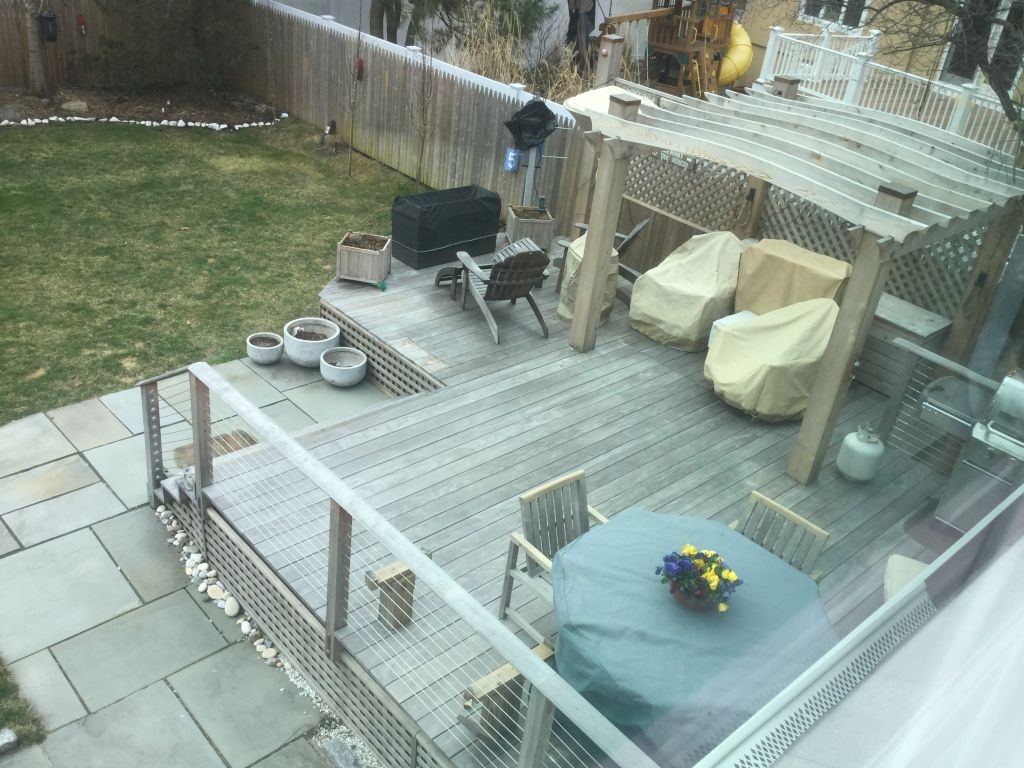
When left unsealed, Ipe undergoes predictable and largely cosmetic changes over time. Ultraviolet exposure causes the surface lignin to break down, resulting in a gradual color shift from the original brown tones to a uniform silver-gray patina. This process does not compromise structural integrity and is often considered desirable in architectural applications. Surface checking may occur, particularly in environments with wide temperature or humidity swings, but these checks are typically shallow and do not propagate into structural defects.
Surface texture can become slightly rougher as UV exposure weathers the outermost fibers. Periodic cleaning mitigates this effect, but even without maintenance, the underlying material remains sound. Importantly, the absence of sealer does not increase the risk of rot or premature failure. In most installations, fastening systems and substructures will reach the end of their service life before the Ipe decking itself.
Environmental and installation factors influence appearance and aging rate but have limited impact on structural longevity. Adequate airflow beneath the deck, proper board spacing, and correct fastening practices are critical to long-term stability. While annual cleaning is beneficial, unsealed Ipe continues to perform exceptionally even with minimal intervention.
Applying an oil or sealer to Ipe does not extend its structural lifespan. The sole purpose of sealing is to slow UV-driven color change and maintain the wood’s original appearance. Most finishes require reapplication on a regular schedule, typically every six to twelve months, to remain effective. From a performance perspective, sealed and unsealed Ipe exhibit equivalent longevity.
For this reason, many architects, engineers, and commercial specifiers intentionally leave Ipe unfinished in applications such as boardwalks, bridges, docks, pergolas, and public installations. Allowing the material to weather naturally reduces maintenance requirements while preserving long-term durability.
In summary, unsealed Ipe wood consistently delivers a service life of 40 to 75 years or more in exterior conditions. Its resistance to decay, insects, moisture intrusion, and mechanical wear is inherent to the material itself. Sealing remains a purely aesthetic choice rather than a structural necessity, making unsealed Ipe a practical and technically sound option for long-term outdoor construction.
