






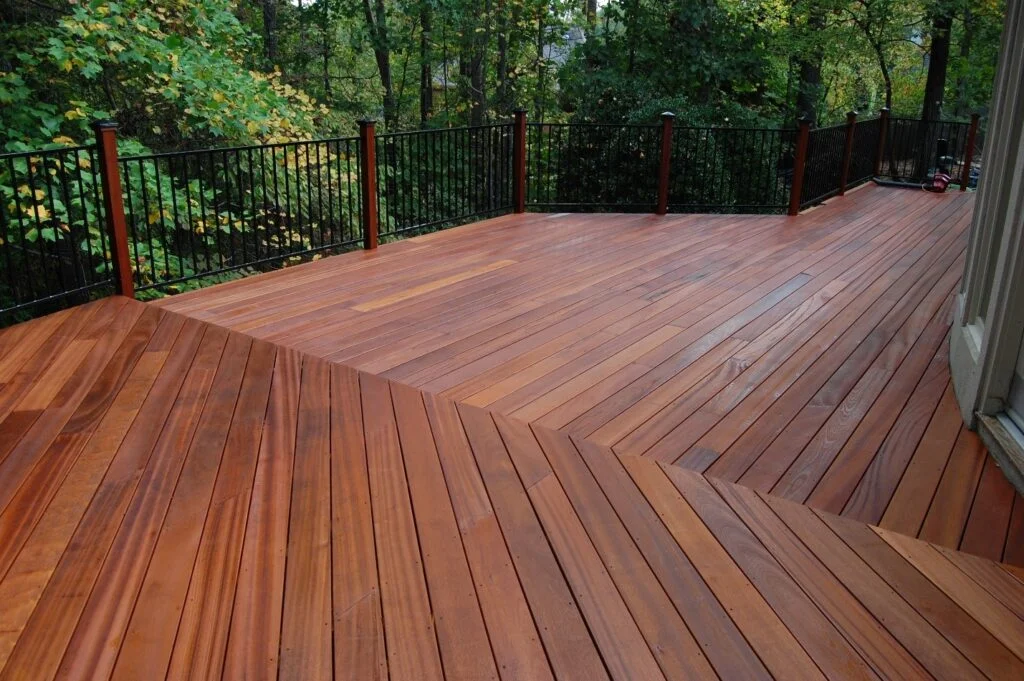
How Strong Is Brazilian Ipe Wood? Hardness, Density, and Structural Performance Explained
Your choice of material can impact your deck’s longevity and strength, making it important to invest in high-quality materials like Brazilian ipe wood. After all, you want to build a deck that will hold up through years of use and changing weather.
Ipe is a Brazilian hardwood that has earned a reputation for exceptional strength. Its ability to handle heavy foot traffic and long-term exposure comes down to its hardness and density. Understanding how these factors work together explains why ipe performs so well year after year.
What makes ipe wood so durable?
Ipe’s durability relies on how hard the wood surface is and how tightly packed its fibers are. Together, these traits help the wood resist dents and moisture. Plus, Brazilian ipe wood can resist insects and decay far better than many other hardwoods.
The hardness of ipe wood
You can tell how hard a wood is by checking it with the Janka Hardness Scale. It tests how much force it takes to dent the wood. Ipe is a Brazilian hardwood that scores 3,680 lbf, making it among the hardest woods available. To put that into perspective, it’s roughly three times harder than oak.
This level of hardness means your ipe deck will stand up to daily wear and resist scratches. It will maintain its surface even in demanding outdoor environments. In case you see minor surface marks, just use an 80-grit sandpaper to restore your deck’s smooth finish.
Because of its strength, working with ipe requires carbide-tipped tools and sharp, high-quality saw blades. For a clean cut, you may want to use a blade with around 80 teeth. Additionally, make sure to pre-drill screw holes to ensure a smooth installation without worrying about broken fasteners or split boards.
The importance of wood density
Density measures how much mass exists within a given volume of wood. Ipe has an average density of about 1,050 kg/m³, which plays a major role in its structural performance. Dense wood absorbs less moisture, so you don’t have to worry about your deck swelling, warping, or decaying over time.
Brazilian ipe wood is so dense that it actually sinks in water, a trait dock builders know well. This density contributes to its impressive fire rating, which is comparable to concrete at A1. Plus, it explains why it makes a great material for building exterior structures.
Ipe compared to other hardwoods
| Wood type | Density (kg/m³) | Janka hardness (lbf) |
| Ipe | 1050 | 3680 |
| Cumaru | 1070 | 3540 |
| Garapa | 800–900 | 1650 |
While cumaru comes close in density and hardness, ipe is the Brazilian hardwood that still leads in overall performance. Garapa, by comparison, offers significantly lower hardness and strength.
No special treatments needed
You don’t need to chemically treat Brazilian ipe wood to make it strong and resistant to damage. Its natural properties already protect it from insects and weather-related damage. But since it’s a dense wood, you’ll need to pre-drill every penetration before fastening decking boards.
How to work with ipe wood
Use the right tools to cut and shape ipe
Ipe’s dense fiber structure means you’ll need durable tools. Carbide-tipped saw blades and drill bits hold their edge longer and cut cleanly without excessive wear. For accurate results, use a table saw or a high-quality circular saw fitted with a carbide blade, especially when sizing boards and trimming edges.
Handle with care
Ipe Brazilian hardwood can be slick and harder to manage due to its weight and natural oils. Wearing gloves improves grip and protects your hands while moving and positioning boards. Cutting and sanding also produce fine dust that may irritate skin and lungs, so always use a dust mask and safety goggles to keep your work area safe and comfortable.
Build your deck with ipe wood
Shop premium-grade Brazilian ipe wood at ABS Wood to build a strong, long-lasting deck you can enjoy for years. You can request a tailored quote by sending a cut list or takeoff. For questions or guidance, call 352-508-4990 or 1-877-722-7473 and speak with our experienced team.
